
StatusCake

New Root Cause Details available

ssl monitoring

We’ve today made it a lot easier for you to identify of timeout related downtimes with the addition of two new functionalities to our “Root Downtime Causes” section.

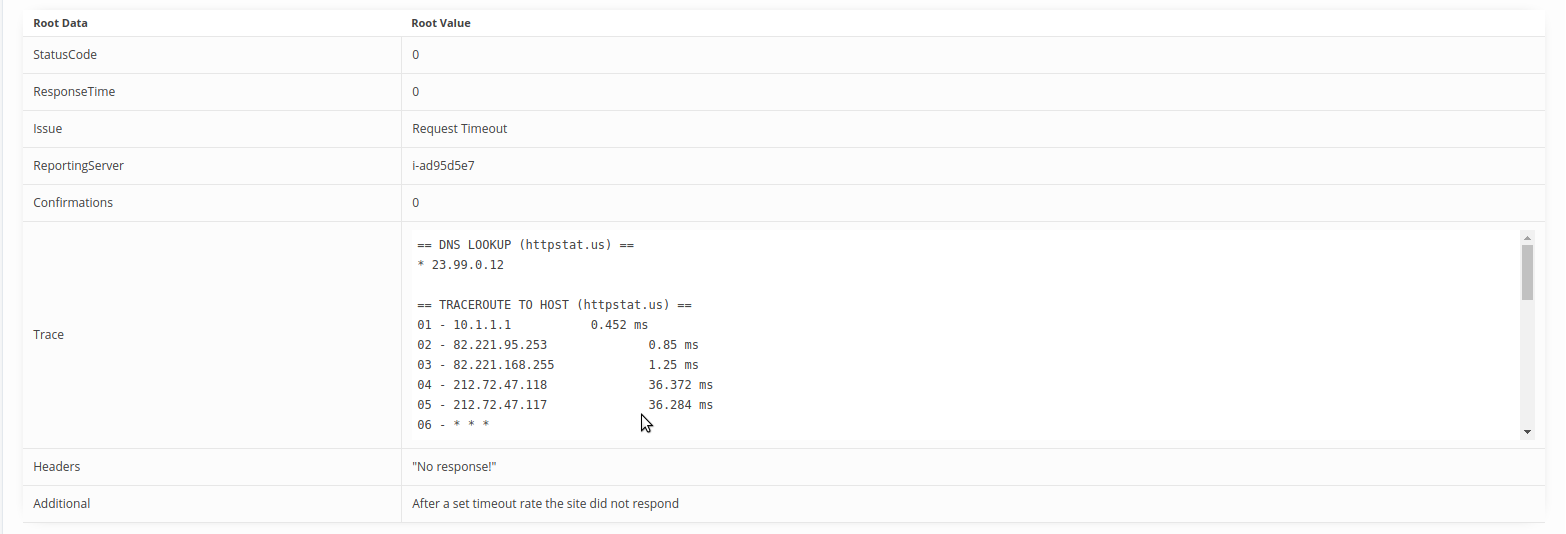
Now you can see both a Traceroute and a DNS check details in the event of a timeout on any HTTP type test within your account, if you are looking for the Enhanced root downtime causes then these can be found below the “Status Periods” section, in the portion of the page marked “Root Downtime Causes”

In order to view the new info in the event of a timeout on one of your tests, simply click the “Details” button next to a Root Cause entry. You’ll then see a full summary of the DNS test and Traceroute. These new stats are only available on our paid plans, so you’ll need a subscription to take advantage of the heightened detail!

downtimeroot

Share this

More from StatusCake

When Code Becomes Cheap: The New Reliability Constraint in Software Engineering

4 min read How AI Is Shifting Software Engineering’s Primary Constraint For most of the history of software engineering, the primary constraint was production. Code was expensive, skilled engineers were scarce, and shipping features required concentrated human effort. Velocity was limited by how fast people could reason, implement, test, and deploy. That constraint shaped everything from team size,

Buy vs Build in the Age of AI (Part 3)

5 min read Autonomous Code, Trust Boundaries, and Why Governance Now Matters More Than Ever In Part 1, we looked at how AI has reduced the cost of building monitoring tools. Then in Part 2, we explored the operational and economic burden of owning them. Now we need to talk about something deeper. Because the real shift isn’t

Buy vs Build in the Age of AI (Part 2)

6 min read The Real Cost of Owning Monitoring Isn’t Code — It’s Everything Else In Part 1, we explored how AI has dramatically reduced the cost of building monitoring tooling. That much is clear. You can scaffold uptime checks quickly, generate alert logic in minutes, and set-up dashboards faster than most teams used to schedule the kickoff

Buy vs Build in the Age of AI (Part 1)

5 min read AI Has Made Building Monitoring Easy. It Hasn’t Made Owning It Any Easier. A few months ago, I spoke to an engineering manager who proudly told me they had rebuilt their monitoring stack over a long weekend. They’d used AI to scaffold synthetic checks. They’d generated alert logic with dynamic thresholds. They’d then wired everything

Alerting Is a Socio-Technical System

3 min read In the previous posts, we’ve looked at how alert noise emerges from design decisions, why notification lists fail to create accountability, and why alerts only work when they’re designed around a clear outcome. Taken together, these ideas point to a broader conclusion. That alerting is not just a technical system, it’s a socio-technical one. Alerting

Designing Alerts for Action

3 min read In the first two posts of this series, we explored how alert noise emerges from design decisions, and why notification lists fail to create accountability when responsibility is unclear. There’s a deeper issue underneath both of those problems. Many alerting systems are designed without being clear about the outcome they’re meant to produce. When teams

Want to know how much website downtime costs, and the impact it can have on your business?

Find out everything you need to know in our new uptime monitoring whitepaper 2021

*By providing your email address, you agree to our privacy policy and to receive marketing communications from StatusCake.